Designing a simple core revenue flow @ExpandoAI
ExpandoAI is a HKSTP startup creating a platform that connects SaaS startups and SMEs to their dream clients through a network of business partners.
Role
UIUX Designer
Product Designer
Product Manager
Team
Xavier Roso - CEO
Sachin Arachige Kodagoda - CTO
Mattia Ferreira - Freelance Designer
Duration
9 months (March - Dec 2024)
Tools
Samsung Notes
Concepts
Figma
Outcomes
Shipped
ExpandoAI finished testing and launched in Q2 2025.
Key features retained
Most of my design was retained despite pivot, with minor adjustments.
Faster development
Reusable patterns enabled pages to serve multiple purposes, cutting development time.
Team synergy
Through constant communication, handover notes and rapid prototyping, we all stayed on the same page.
Designing the money-making flow at

ExpandoAI is a SaaS platform that connects businesses to potential clients through a network of connectors (partners) who use their network to identify relevant potential clients.
When I returned as the Product design lead, I was responsible for the end-to-end design of some flows and updating some others. One of the most important flows I worked on was the referral-deal flow where I sought to design a flow that is flexible enough to support different program structures, while maintaining a simple user experience. All while reducing development time, since we have a small team.
I was also responsible for playing many other roles from defining product strategy, roadmap, features, and specifications, along with being highly involved in collaborating with the development team for implementation.
Identifying the customer
We sought to launch of Expando AI to cross over the chasm from the early market into the mainstream market. I used the the Roger’s S-innovation adoption curve and user research to create user personas for our two different user roles so we could target Expando at their pain points.


Important concepts to understand
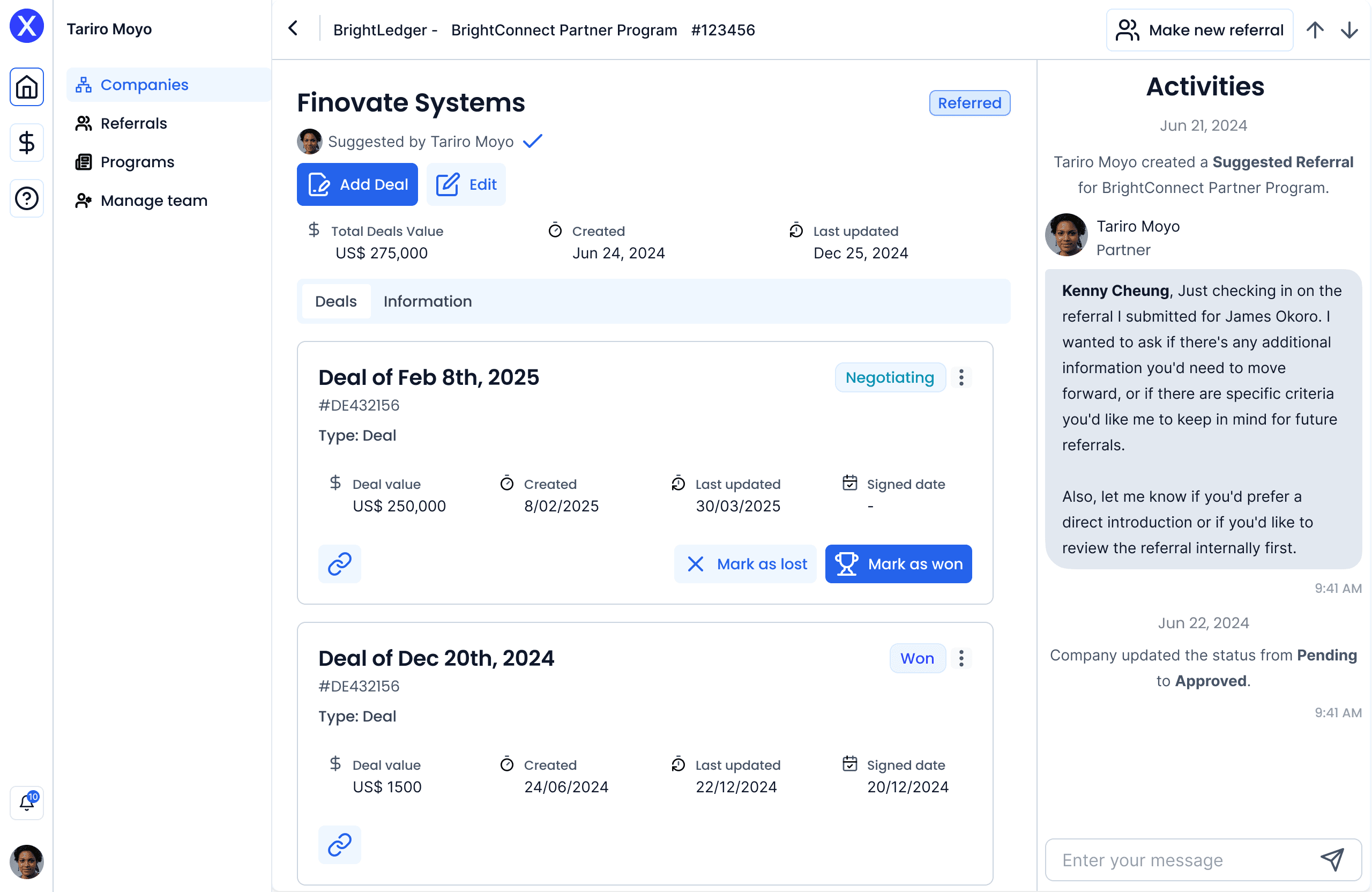
Referrals
An introduction of a potential client made by a partner to the program owner.
Referrals stages: pending, rejected, accepted and referred.
Deals
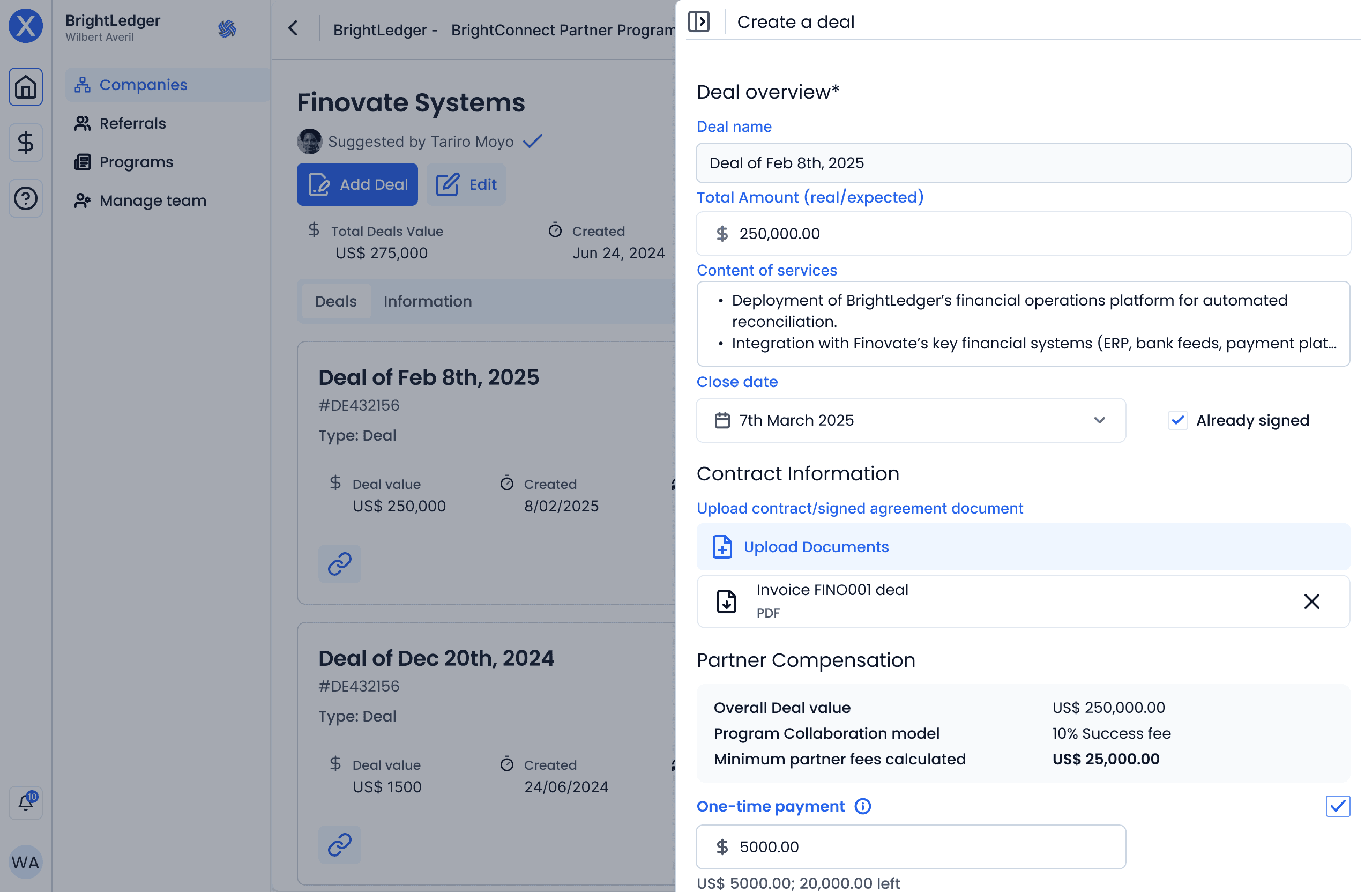
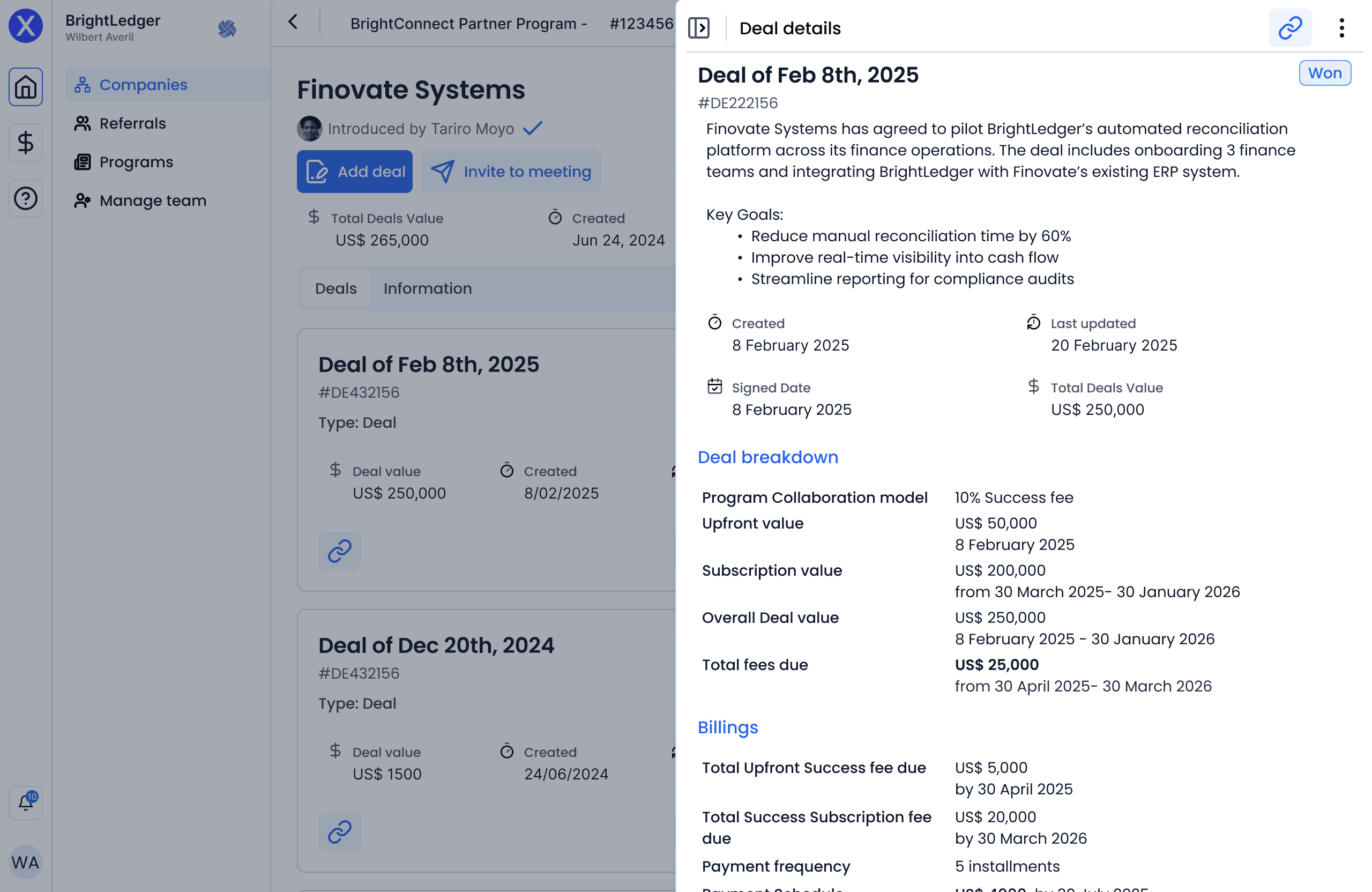
The final agreement made between the program owner and introduced client. 1 referral: many deals.
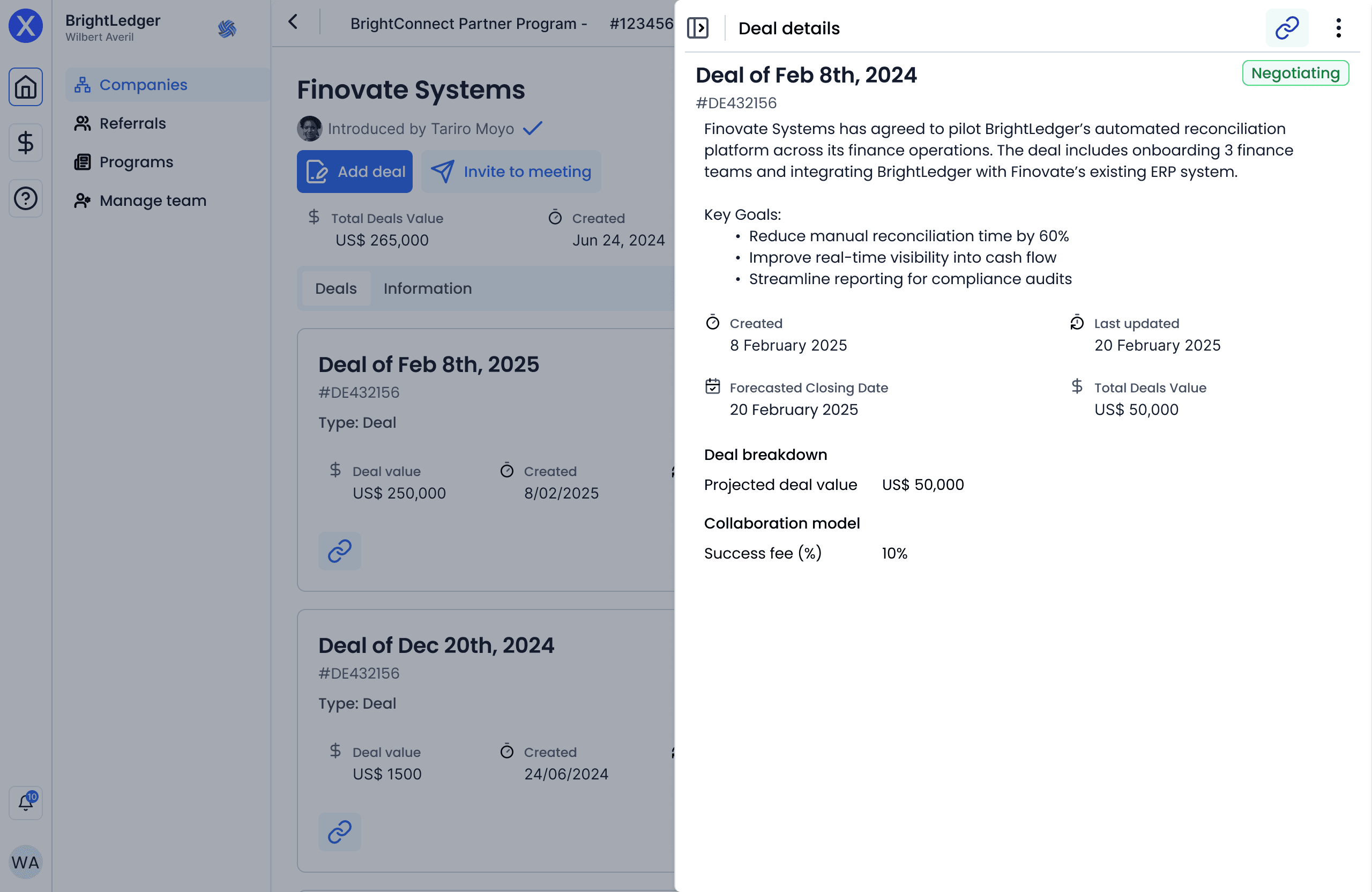
Deals stages: negotiating, lost and won.
Collaboration models
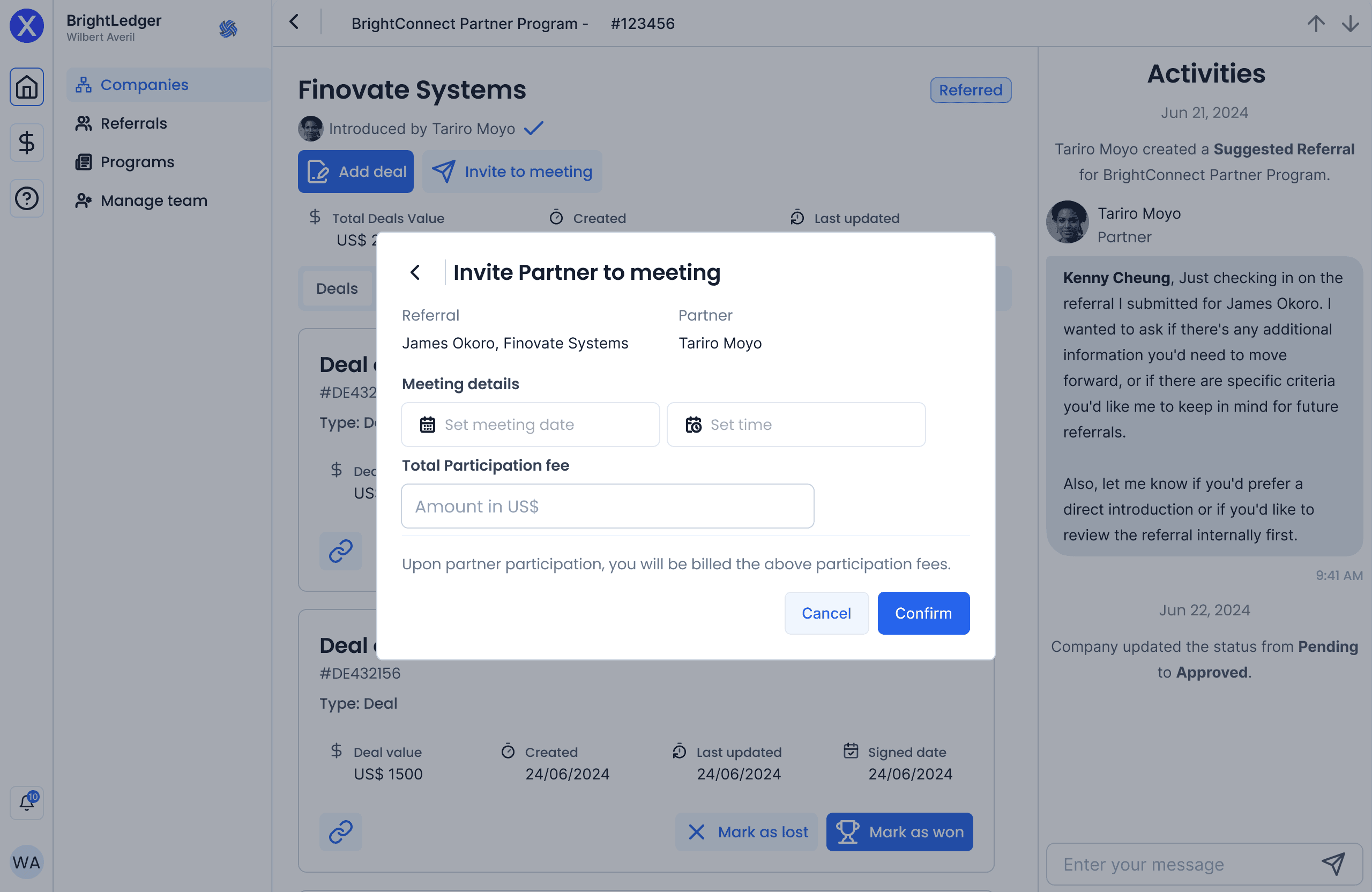
The models for compensating partners on referrals and deals.
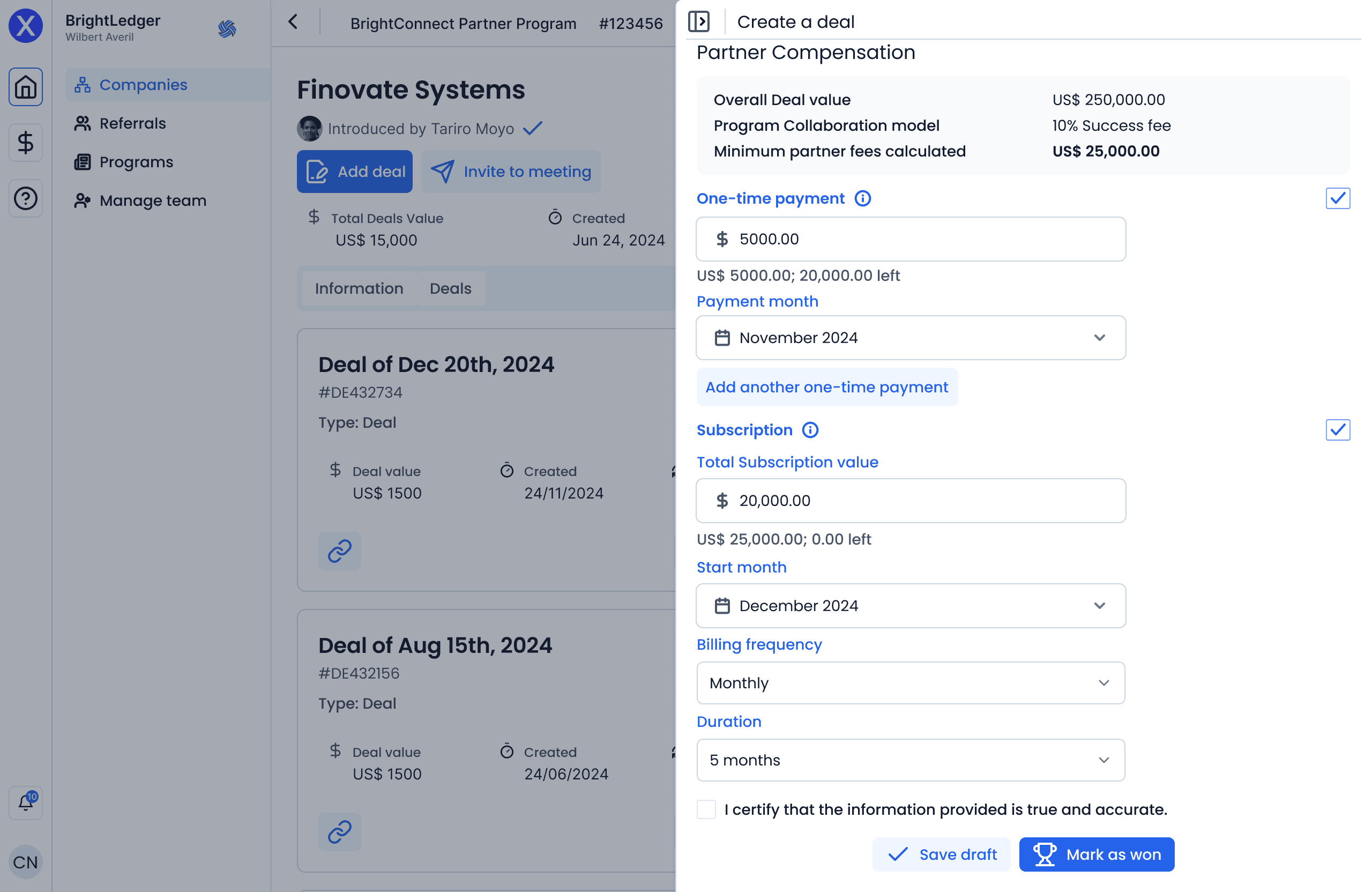
Models offered: introduction fees, meeting fees and success fees.
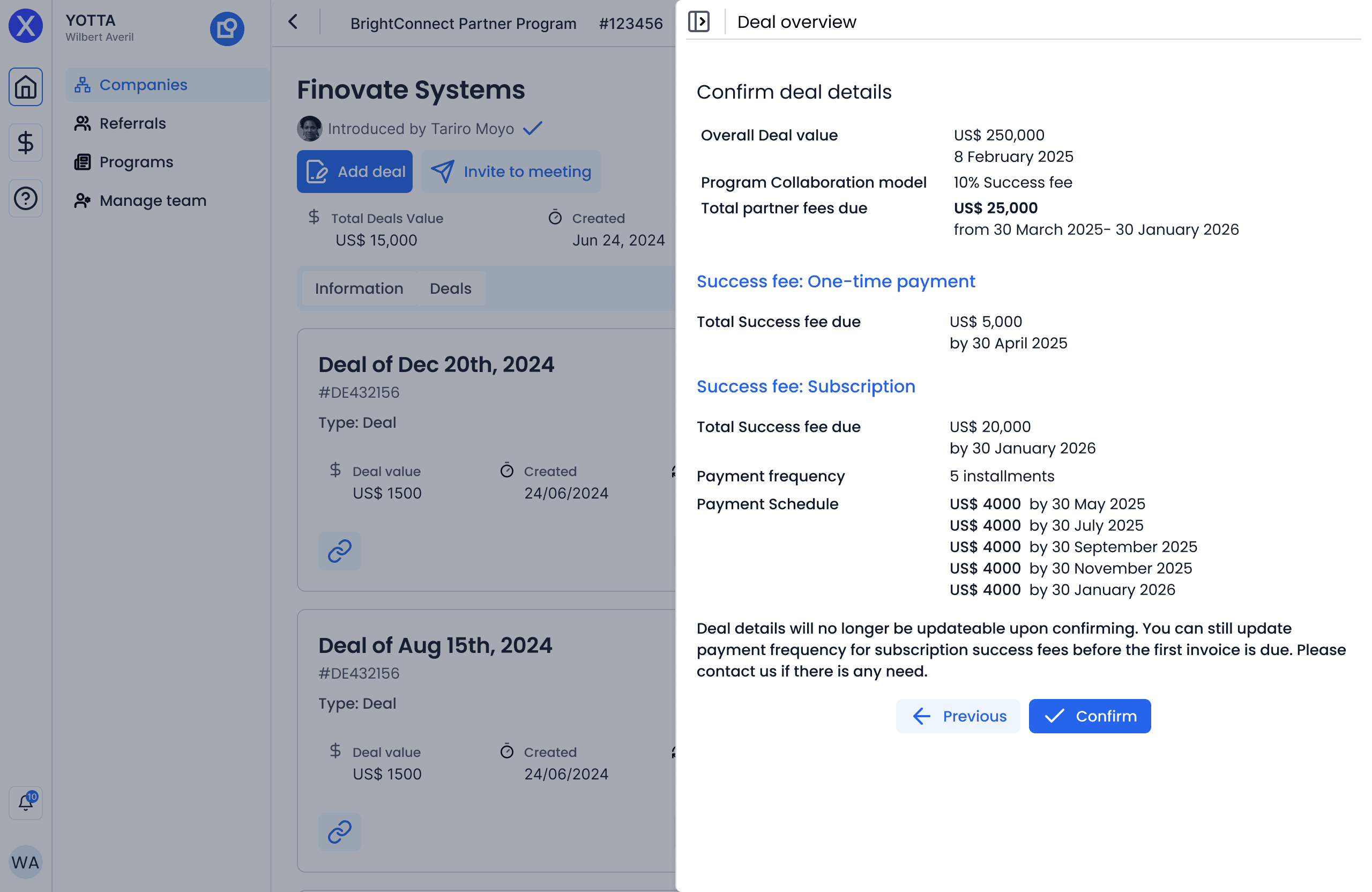
Billing
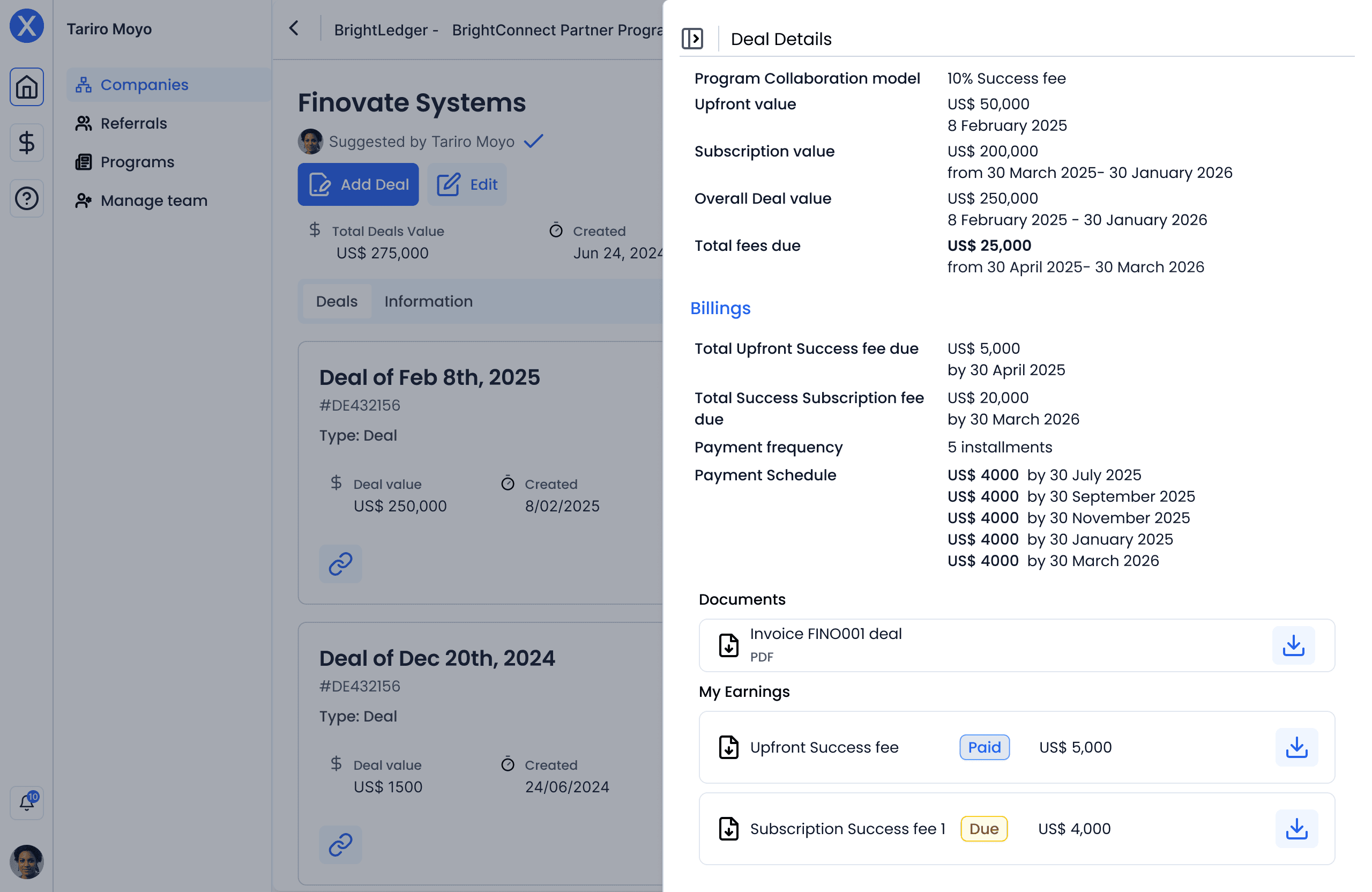
Fees charged to the partner based on the collaboration model and deal structure.
Billing can be recurring, upfront payments or hybrid.
User roles
Rights and abilities available to the user based on the role they played.
Users are either program owners or partners.
Collaborating for data structure
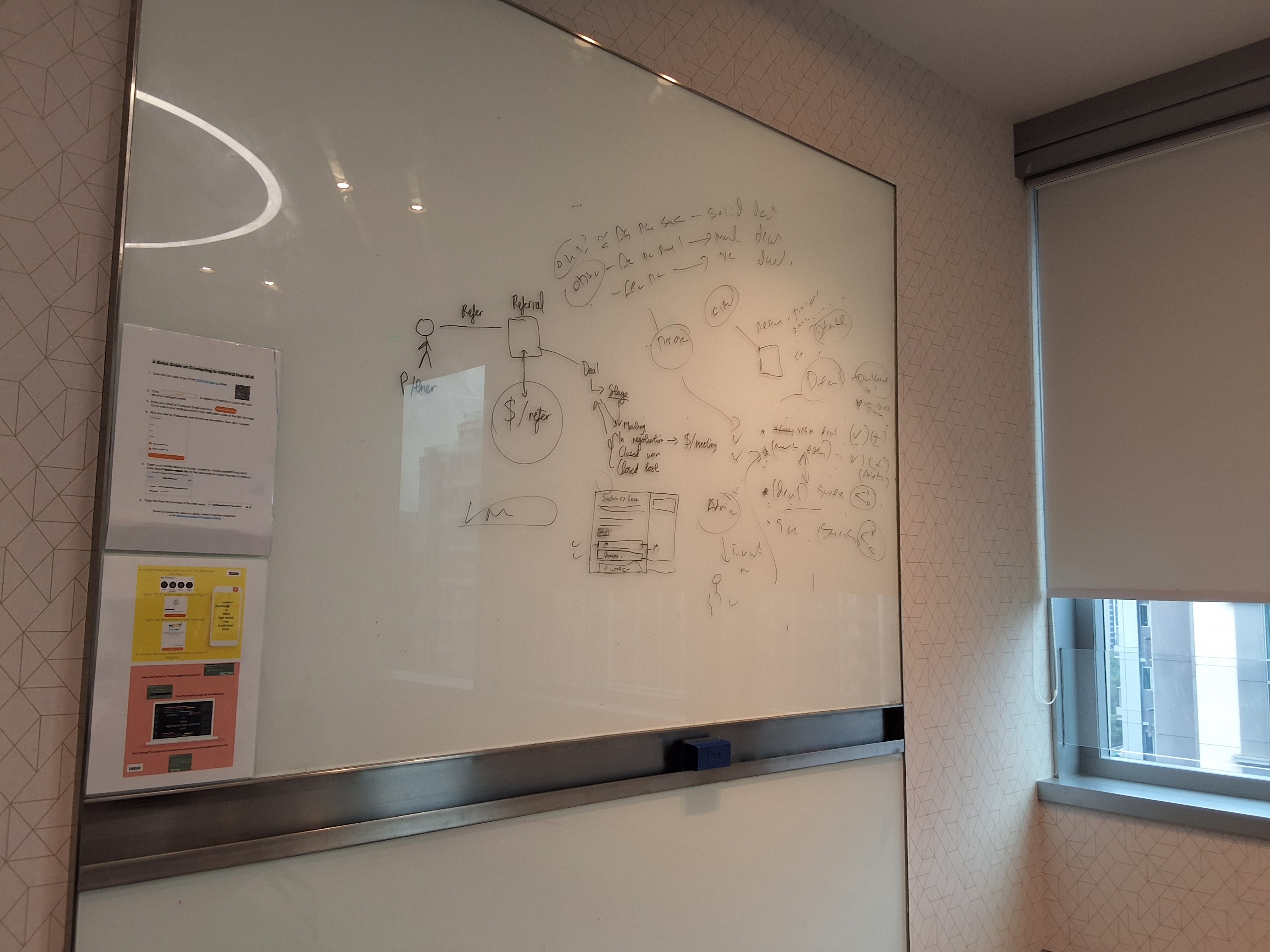
Defined referral-to-deal relationships, who can edit what, features per stage and the backend structure with the CTO. Had frequent planning and feedback syncs.
What I designed and updated
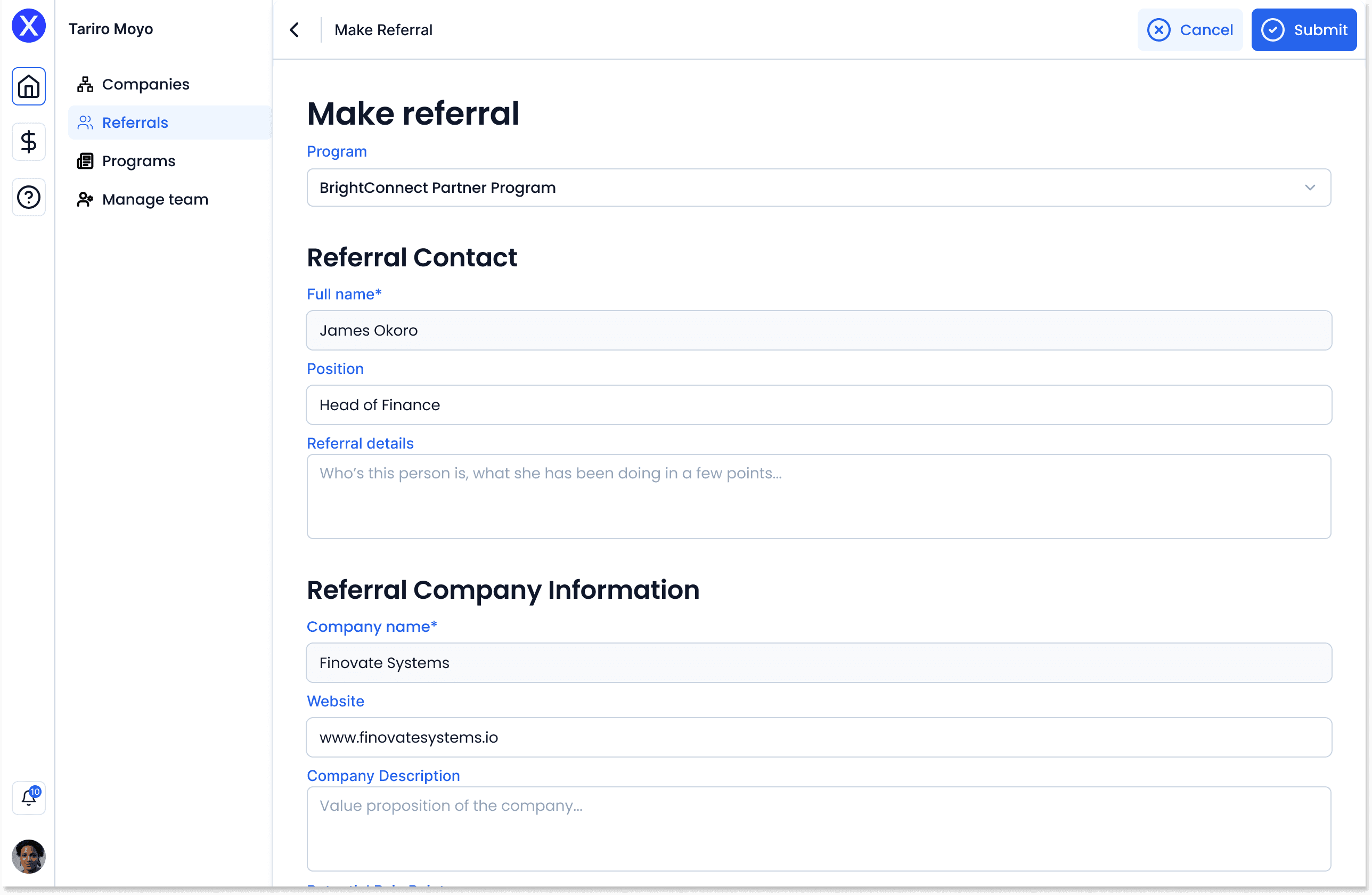
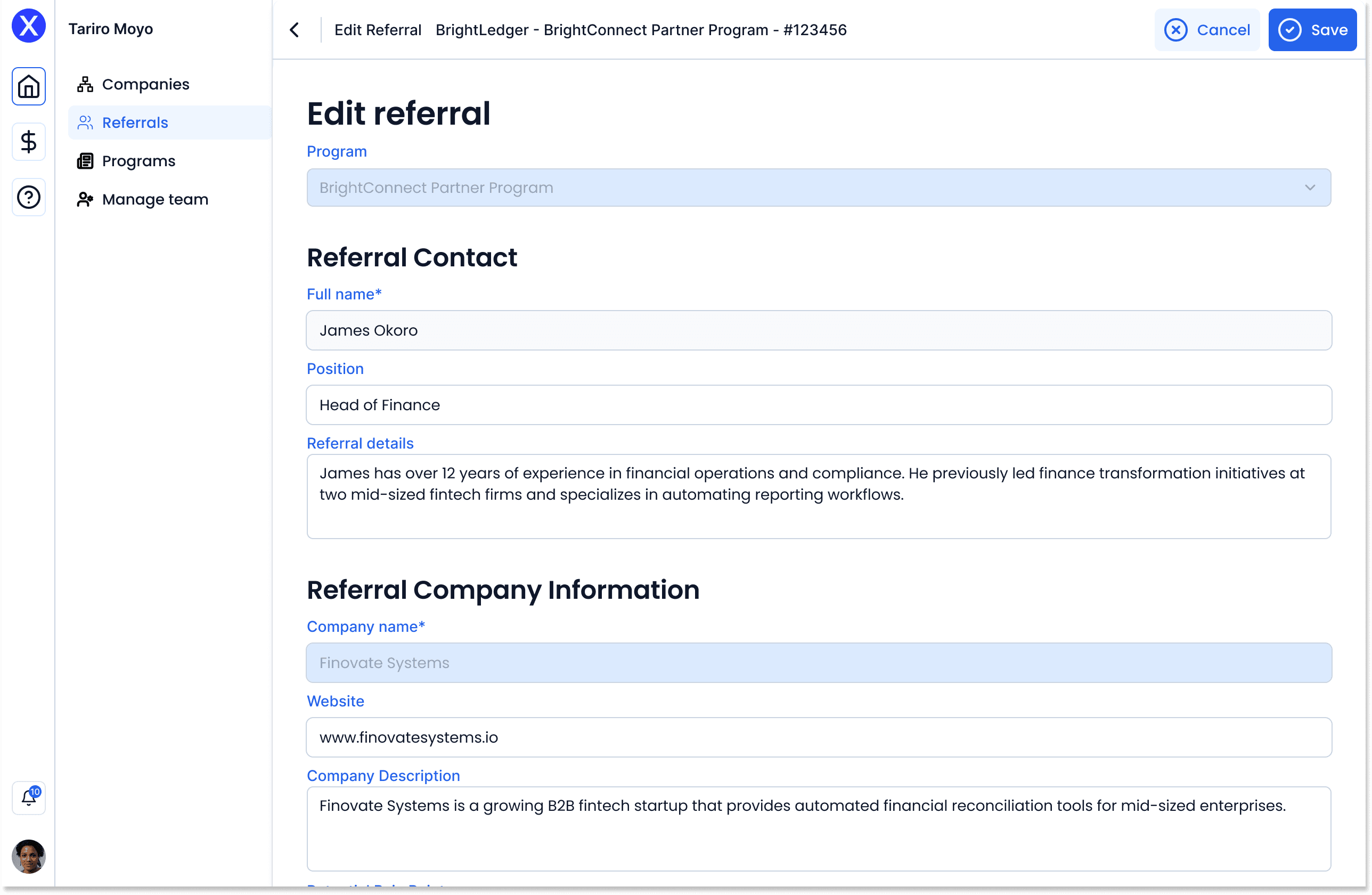
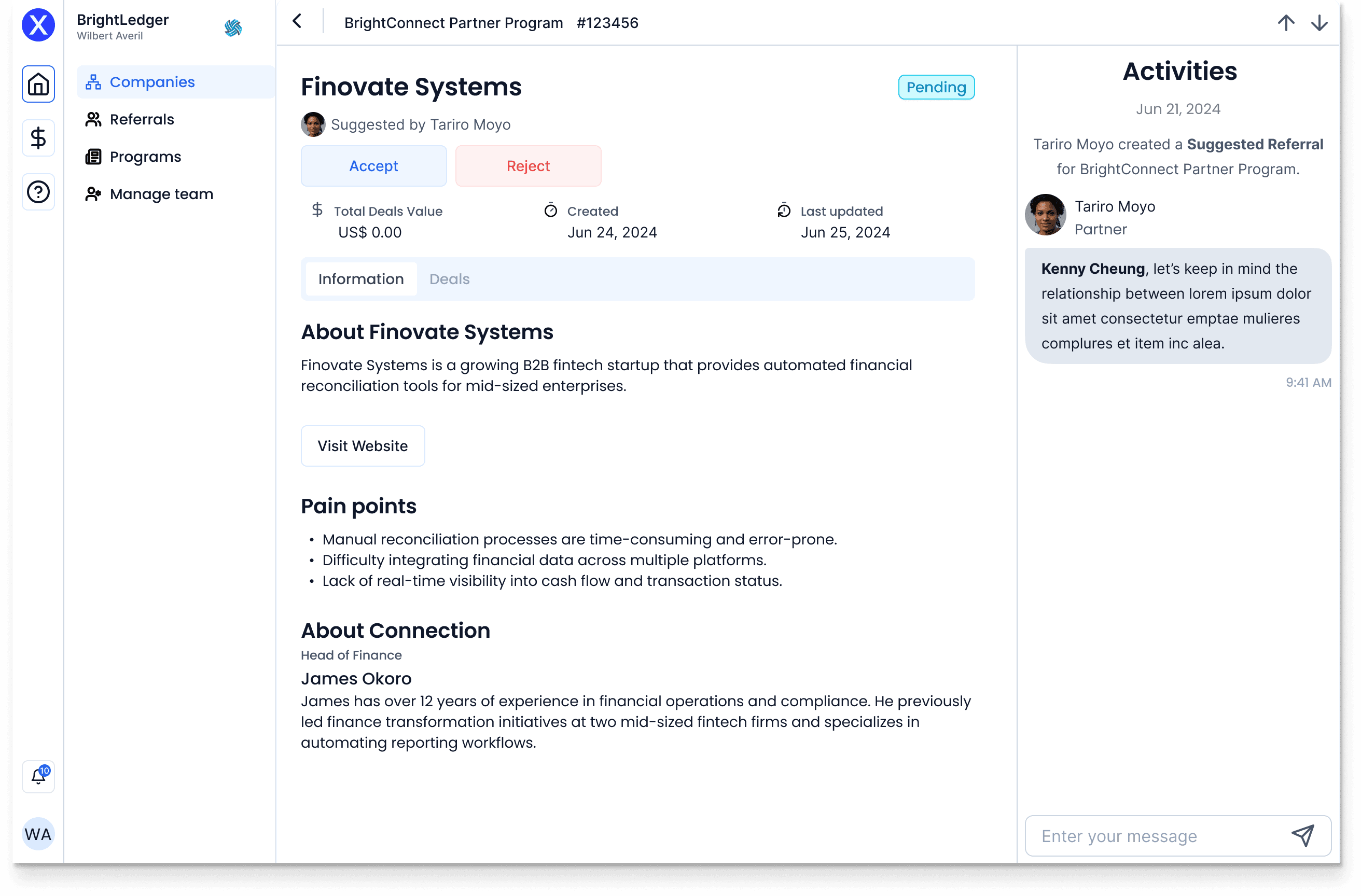
I updated the initial suggest-a-referral flow, referral list and referral page based on team feedback.
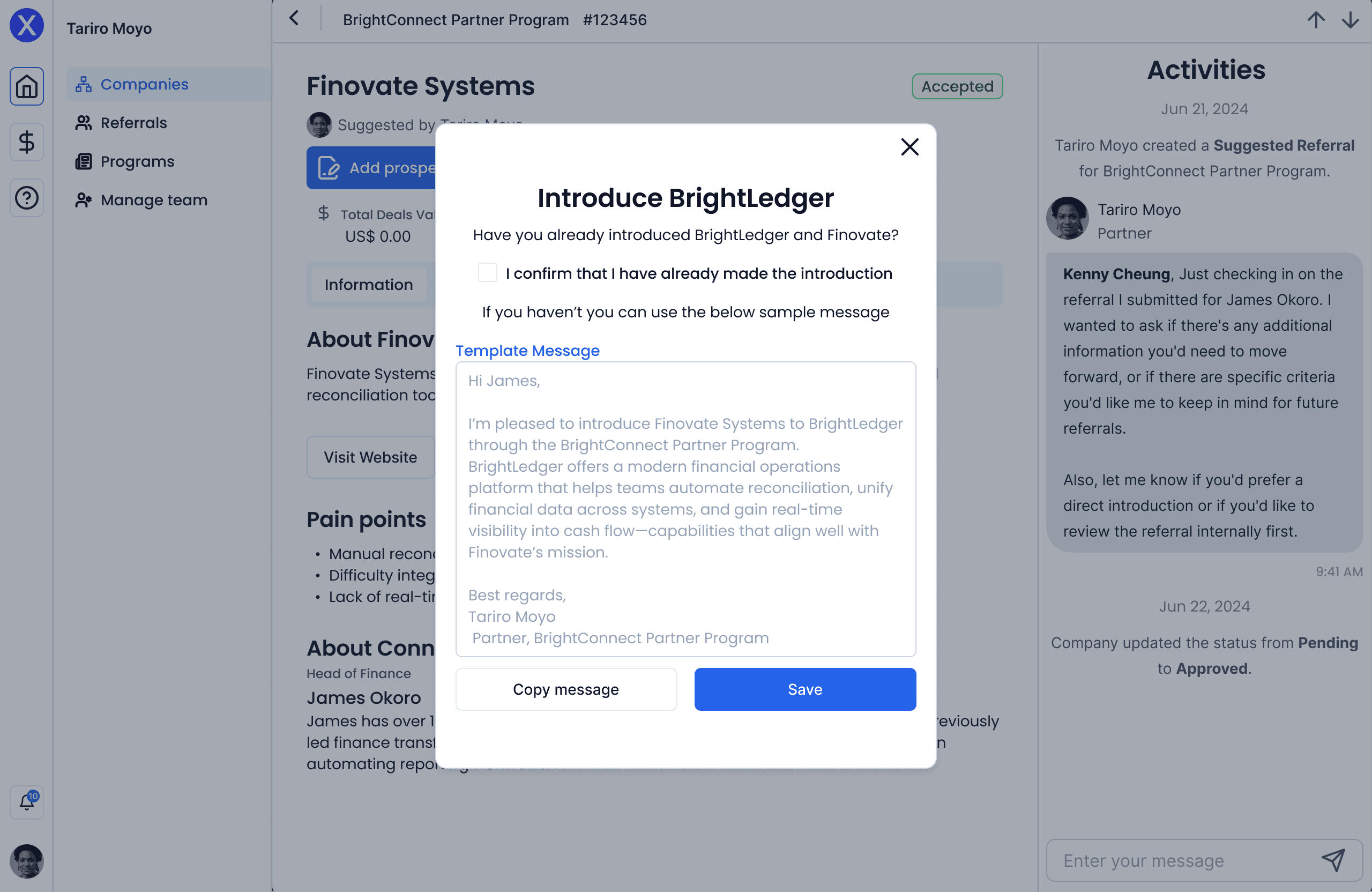
I did the end-to-end design of the edit referral page, deal modal flow, reusable deal summary, along with shorter flows like the invite-partner-to-meeting, the introduction template and stage change flows.
Documentation
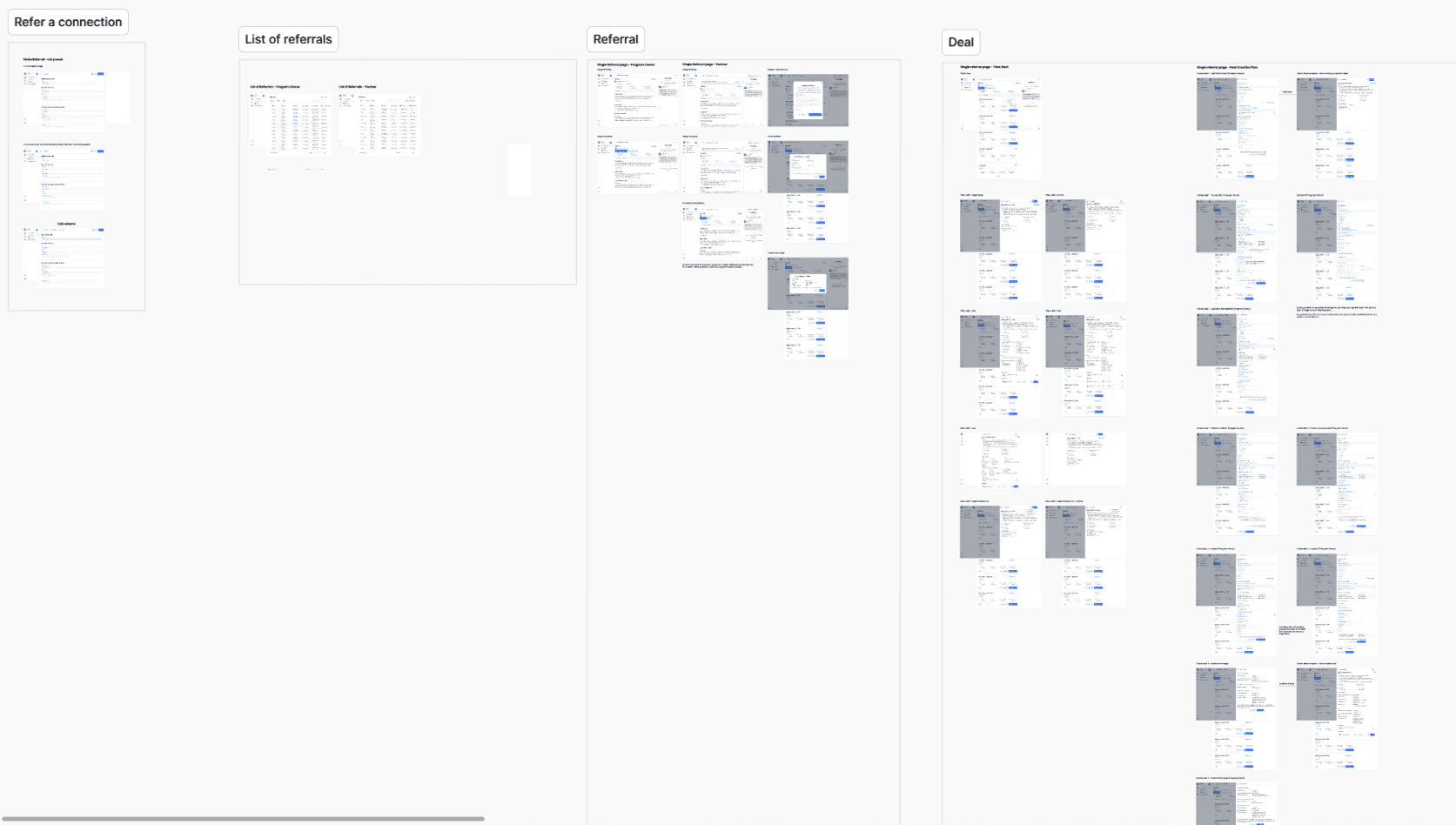
Annotated specs, sections and prototypes aligned engineering and reduced back-and-forth.
Process
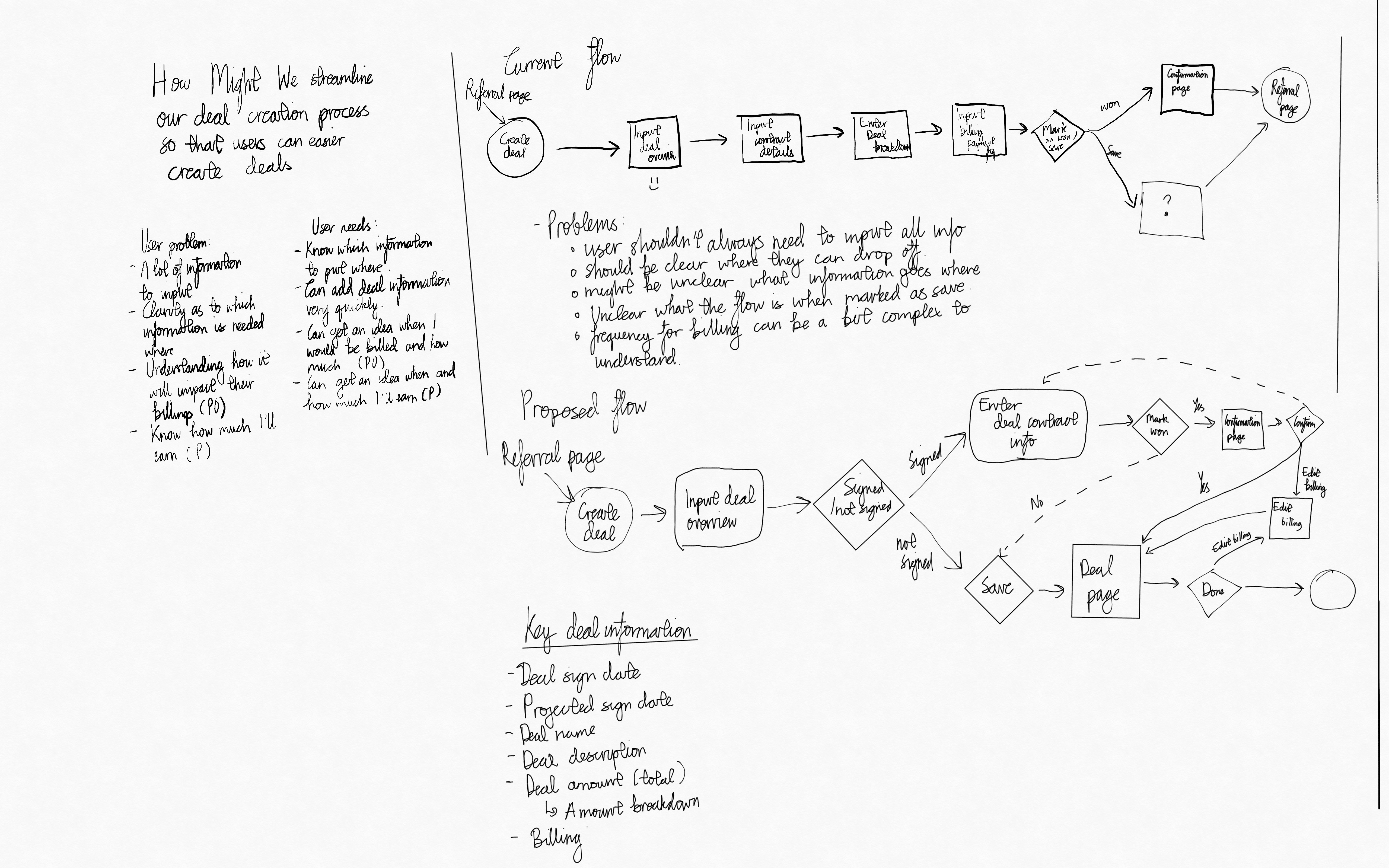
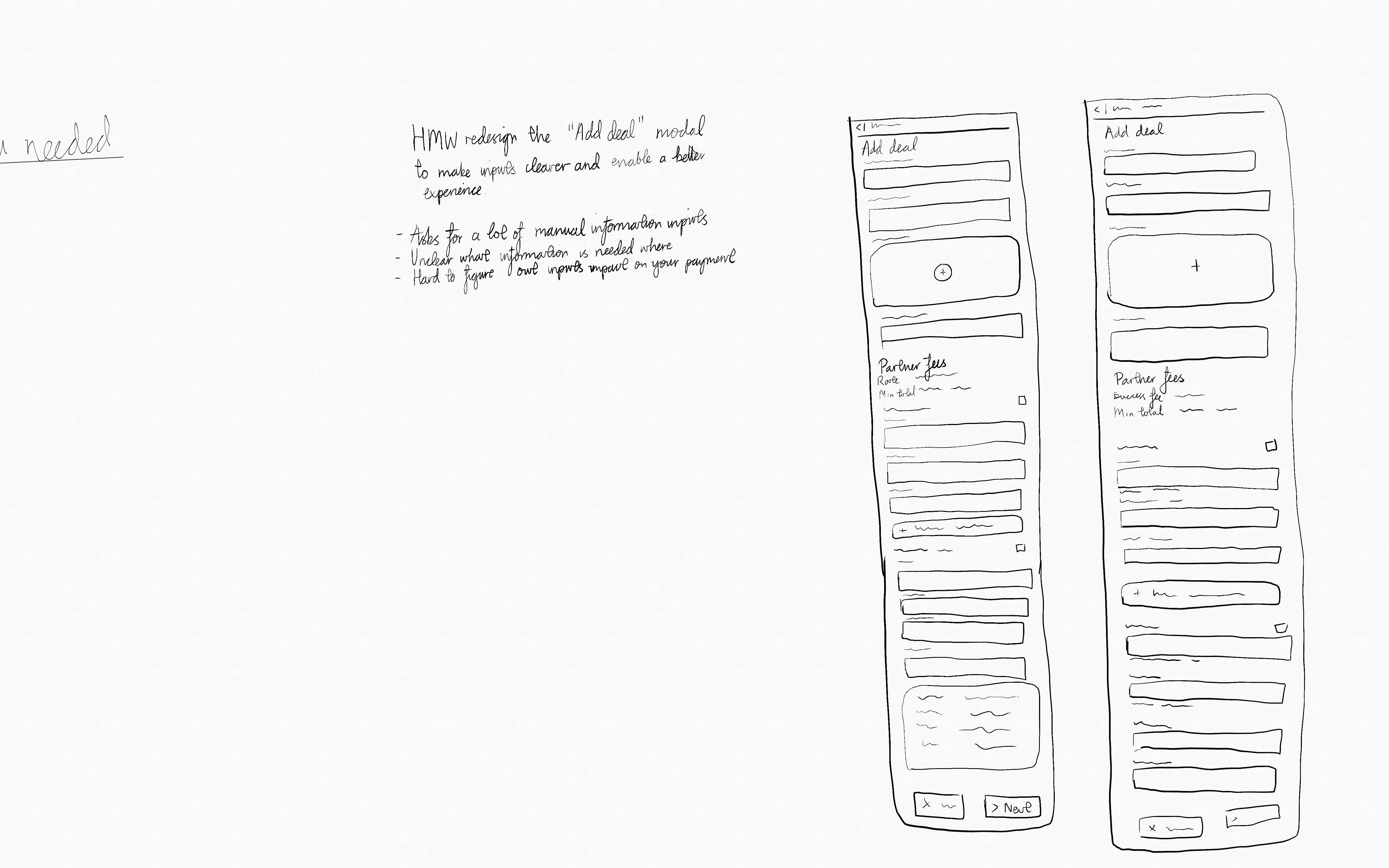

Some of my brainstorming process for designing the referral flow.
Reflection
What did I learn?
Any and as much analytical data available is incredibly helpful for designing well.
Understood more about the real product and design trade-offs made in industry and how my designs translate to development time and effort.
Applying my business understanding and background for end-to-end product design, management and ownership.
Learnt how to write user stories and what level of detail is needed for them.
Gained a more holistic view of product through working closely with developers and understanding their perspective.
Learnt more advanced Figma hacks for faster design and increased consistency.
What would I improve?
Paying closer attention to how both user types meet and complement each others needs and pain points for greater synergy and product fit.
Exploring further ways to simplify the deal creation form for an easier, more straightforward experience with less cognitive load (perhaps AI).
Would have designed the flow for program owners confirming receipt of an introduction.
Impact@ Expando
↑6%
in scroll depth (86% → 92%)
↓ 80%
in rage clicks
Working with Vimbai has been an absolute pleasure. His ability to stay calm under pressure is truly remarkable, making him a steady and reliable force in any project. He has an incredible eye for detail when it comes to design, ensuring every element is polished and purposeful. A fast learner and deeply dedicated to delivering quality work, Vimbai consistently exceeds expectations. His professionalism and commitment make collaboration smooth and enjoyable. I highly recommend him!

Sachintha Kodagoda Arachchige
CTO & Co-Founder @Expando
Vimbai Mushayikwa It was a great satisfaction to see your growth and fast learning contribute during your time interning at Expando. Wishing you the best in your new projects and keep us updated!
Xavier Roso
CEO & Co-Founder @Expando
↓ 67%
in dead clicks
Next Case Study
Thank you for reading this far, you can take a look at my next portfolio case study if you'd like to see more of my projects.